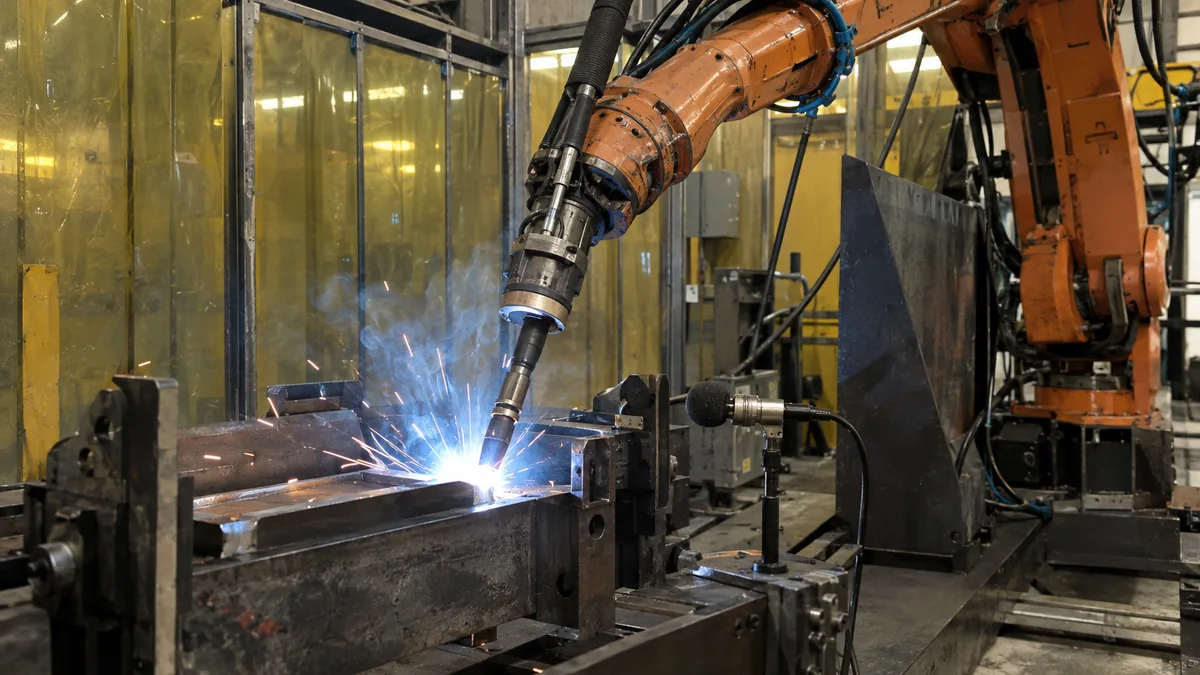
On a perfect production line, every joint appears in exactly the same place. In a real fabrication shop, parts move, tolerances stack up and not every batch looks like the last.
What caught our attention
At the American Welding Society’s 2026 automation conference, speakers discussed vision systems, AI-assisted joint tracking and sensor-guided torch paths. Instead of following only a fixed route, a system can scan the actual joint and adjust its movement to the workpiece. The AWS report describes demonstrations and industry presentations, not a controlled comparison of machines.
Where a fabricator might use it
Think short runs, mixed products and assemblies with awkward fit-up. If finding the seam takes less programming and fixturing, automation may become worth considering for jobs that previously stayed manual. That is a possibility to investigate with your own parts—not a promise that a robot can handle every poor joint.
What we would ask before buying
How reliably does it find the joint on dirty or reflective material? How much setup does a new part need? What happens when the gap exceeds the qualified procedure? Guarding, maintenance, fit-up, welding procedure qualification and inspection remain part of the job. The machine follows a process; people decide whether that process is suitable.
References and original documents
This is an independent explanation, not a hands-on test or endorsement.
- American Welding Society — Welding Digest, July 2026
Research and conference demonstrations are not a substitute for qualified procedures, safety training, manufacturer instructions or product approvals in your jurisdiction.