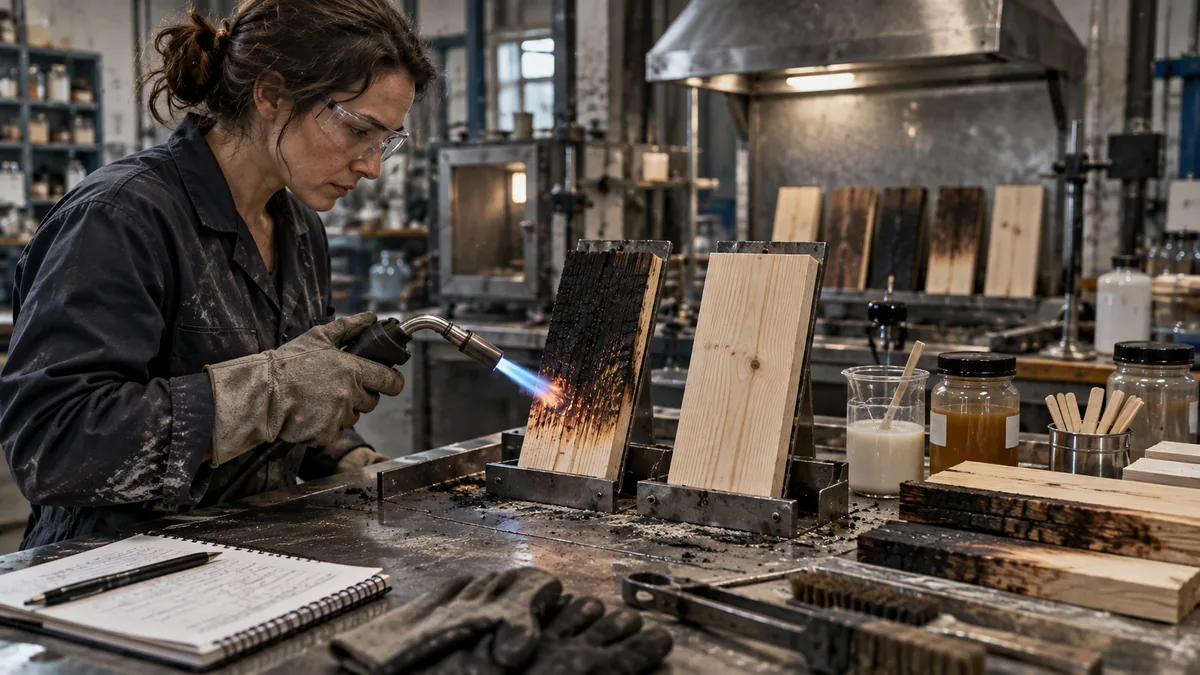
Finding a flame-retardant ingredient is only half of the job. It also has to be processed reliably, work with the base material and meet the fire requirements of the finished product.
Where the idea comes from
Fraunhofer WKI and IAP reported work using corn steep liquor—a by-product from starch manufacturing—as a source of phosphorus-containing compounds. The researchers tested ammonium phytate formulations made from phytic acid, with a nitrogen source, in wood-plastic composites. Fraunhofer notes that phytic acid on its own is not an effective substitute.
Why it is interesting
Manufacturers of panels and composites want additives that can meet performance targets without creating unnecessary supply or processing problems. Recovering an ingredient from an existing by-product is a promising direction, but only if quality, cost and scale stand up in production.
The necessary caution
An ingredient with flame-retardant properties does not give every finished board the same fire rating. The precise formulation, thickness, installation and applicable tests matter. The researchers discuss potential industrial use; anyone specifying a product still needs its actual performance documentation.
References and original documents
This is an independent explanation, not a hands-on test or endorsement.
- Fraunhofer WKI / IAP — Research news, 1 September 2026
Research and conference demonstrations are not a substitute for qualified procedures, safety training, manufacturer instructions or product approvals in your jurisdiction.