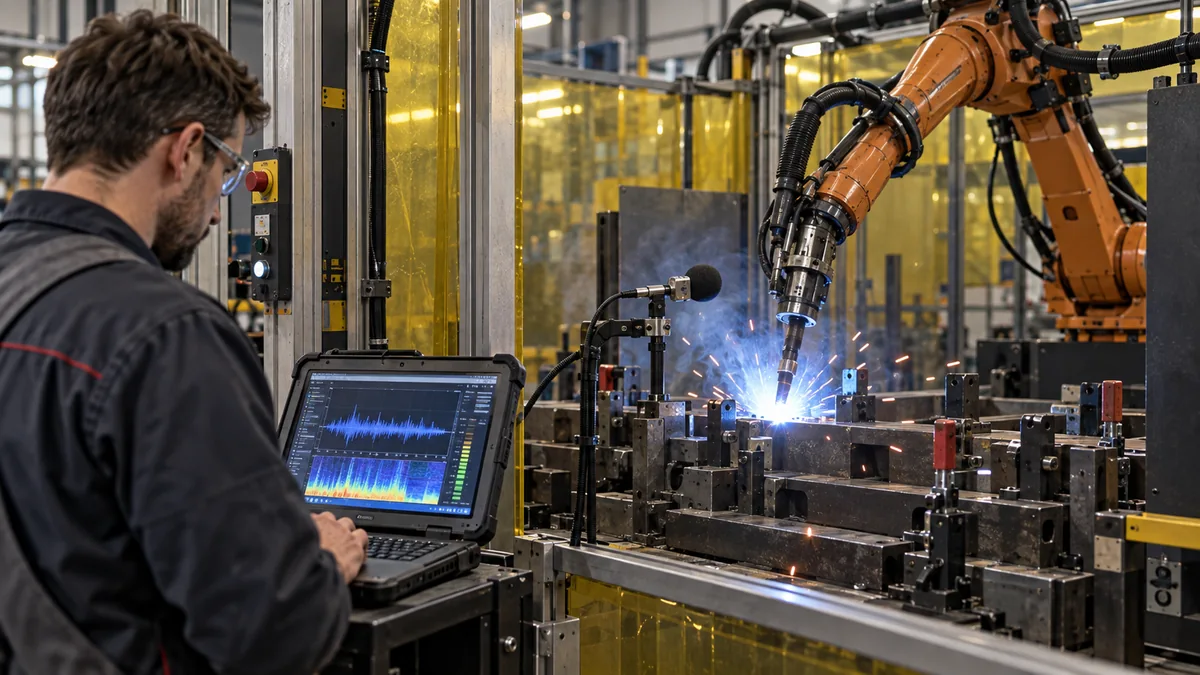
A skilled welder pays attention to a sound that changes. Researchers are looking for a way to help automated production notice those changes as they happen.
What the researchers are doing
Fraunhofer IDMT is developing a system to capture the airborne sound of MAG robotic welding. Machine-learning methods analyse the audio for unusual patterns associated with changes in the welding process. The project, called AI-MAG, runs from February 2025 to July 2027.
The research concerns monitoring and inference from acoustic patterns. It is not a promise that listening alone can certify every weld or replace inspection specified by a qualified procedure.
Where this could matter
In automated production, repeatability is important. A microphone-based system might help a team recognise process drift earlier, examine the affected parts and decide whether an adjustment is required. Fraunhofer also describes industrial acoustic monitoring pilots; the status of this particular project should be checked with the team.
What a fabrication shop should ask
Which weld faults were represented in the training data? Can the system separate welding sound from background machinery? How is a warning validated against inspection results? What happens if material thickness, joint geometry, position or parameter settings change? These are questions for the supplier and the welding engineer, not claims that have already been answered for every workshop.
The human part
A warning can direct attention. The shop still needs people who understand the joint, the WPS, the application and the consequence of a defect. That is where technology and experience work together.
References and original documents
This is an independent explanation, not a hands-on test or endorsement.
- Fraunhofer IDMT — AI-MAG: Audio Intelligence for MAG robotic welding; project duration February 2025–July 2027
- Fraunhofer IDMT — Industrial Sound Analysis; research applications in welding and machining
This is a research report, not welding procedure or acceptance guidance. Follow the approved procedure and inspection requirements for the actual joint.