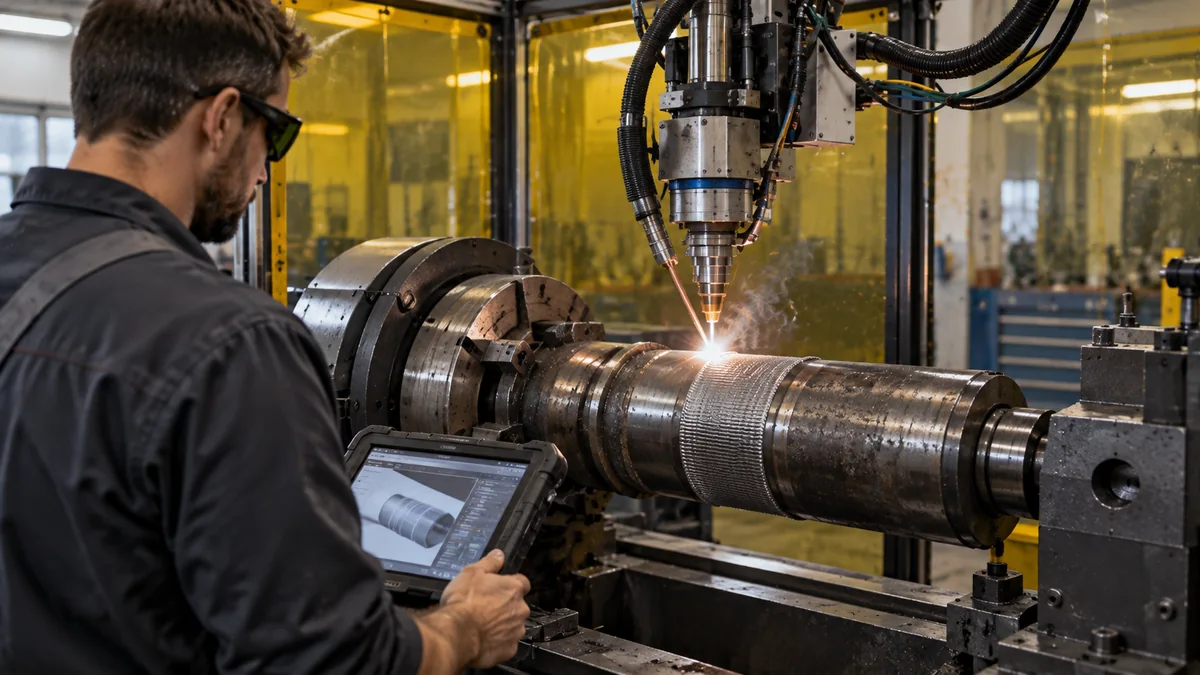
Replacing a large precision part because one area has worn out can be expensive. Repairing it by adding metal is an old idea; making the process precise, repeatable and practical on difficult shapes is the hard part.
The development
Fraunhofer ILT and Cailabs announced a partnership in March 2026 around a compact head for wire-based laser material deposition. The partners describe a head weighing under five kilograms and intended for laser powers above twelve kilowatts. Fraunhofer is developing process parameters and qualifying the system for different shapes and uses.
Why wire matters
In laser deposition, a fed wire melts into a pool on the part and builds material where needed. Wire can be easier to handle than loose powder, and some alloys are readily supplied in that form. A compact coaxial head may be easier to position with a robot around edges and awkward contours.
What remains to prove
This is a development programme, not a general repair recipe. The original release says system trials were being prepared, including work on the laser profile, wire feed and travel path. The material, dilution, heat-affected zone, subsequent machining and required inspection still determine whether a repaired part is fit for service.
References and original documents
This is an independent explanation, not a hands-on test or endorsement.
- Fraunhofer ILT — Research press release, 4 March 2026
Research and conference demonstrations are not a substitute for qualified procedures, safety training, manufacturer instructions or product approvals in your jurisdiction.